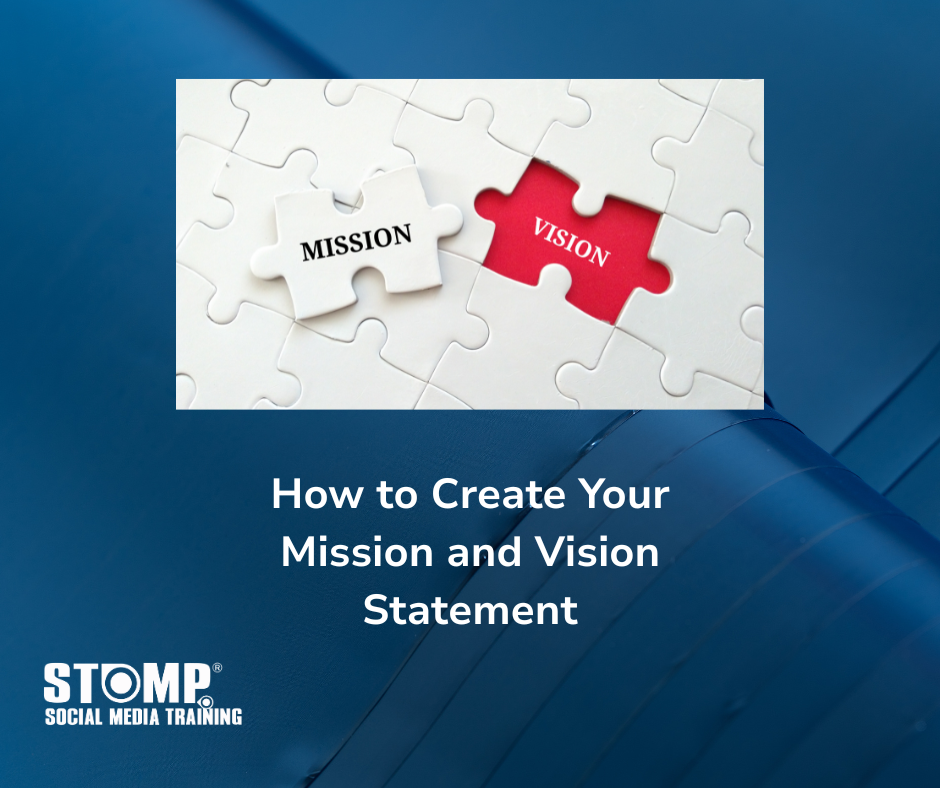
Mission and vision statements are often treated as something you write once for a business plan (during a “Start Your Own Business” course, typically) and never looked at again. They end up buried on an About page, full of vague language and good intentions but disconnected from the day-to-day reality of running the business.
I won’t lie, I did the same myself! I gave mine some thought during my SYOB and then completely forgot about it for 3 years. However, during those 3 years, I kind of wandered around with no real direction for my long-term strategy. I eventually went full-time with my business at the beginning of that third year and realised I needed to build a structure. That’s where I somehow remembered my mission and vision statement and clarity returned!
When they're done properly, your mission and vision act as a compass. They guide decisions, shape your messaging and help people understand what you stand for. They also make marketing much easier because you’re no longer guessing at what to say. You’re communicating with true purpose and direction.
If you’ve been putting this off or feel unsure where to start, here’s a practical way to create mission and vision statements that actually support your business.
Before writing anything, it helps to understand the distinction. Your mission statement explains what you do now, who you do it for and how you do it. Your vision statement describes where you want to go. It’s about the future you're working towards and the impact you hope to have. It's something for you to aim for and for your audience to see as well.
In simple terms:
It makes a lot of sense that large companies and organisations often have formal statements, as they need alignment across teams. Small businesses sometimes assume they don’t need them. They are their business, so why should this be necessary?
In reality, clarity is even more valuable when you’re small. You can get caught up in the minutiae a lot of the time, and these help with that.
A clear mission and vision statement would help you:
Without this clarity, you may take on work that doesn’t suit you, copy competitors or struggle to explain why your business matters
.
The best mission statements are rooted in real problems.
Ask yourself:
For example, as a social media trainer, it’s not just about teaching platforms. I’m helping business owners feel less overwhelmed and more confident about what they're doing and becoming more visible online.
Find ways to focus on the transformation you provide, not just the service you deliver.
Trying to serve everyone weakens your message. Your mission becomes more powerful when it clearly reflects who you support.
Consider:
You don't need to exclude other types of course, but explaining who you want to target helps the right people recognise themselves in your message.
For example, “small business owners and social enterprises” is far clearer than "anyone who needs marketing support".
Your mission should reflect not just what you do, but how you do it. Honestly, I find defining a USP the hardest part about this. Most businesses really aren't that unique these days! But if you can guarantee something, like perhaps a rapid turnaround of quotes, delivery or value, then make sure you share that.
Think about:
Do you prioritise practical, jargon-free training? Do you focus on long-term strategy rather than quick fixes? Do you emphasise confidence and independence? If you're an existing business, it’s well worth re-examining your testimonials or reviews. You already have customers telling you what they found of value!
These elements make your mission feel real rather than what everyone else does..
Bring these elements together, as below:
Keep it clear and natural. Avoid corporate language. If it sounds like something you'd never say out loud, it needs simplifying.
A useful structure is:
“We help [who] to [achieve what] by [how you do it].”
For example:
“We help small business owners feel confident and visible online by providing practical, jargon-free digital marketing training.”
Your version should reflect your own work and values, but this structure keeps it grounded.
Your vision looks beyond what you do today. It describes the change you want to see in the world or in your industry because your business exists. It may sound a bit blasé, but it is meaningful to you and your customers.
Ask yourself:
A vision statement might focus on empowerment, accessibility, sustainability, fairness or raising standards in your field.
Keep it aspirational but believable. It should stretch you without feeling disconnected from reality. Remember, you can always update this at a later stage, I did mine.
For example:
“A business community where small business owners feel confident managing their marketing and are not dependent on agencies to be visible.”
These statements shouldn’t just live in a document you never open again. Or fester on the About page of your website; they should be instructional and line up with your enduring and ongoing business strategy. Not just your marketing strategy.
You can use them to:
They also make decision-making easier. When a new opportunity arises, you can ask whether it aligns with your mission and supports your vision.
If it doesn't, it may not be the right fit.
There are a few patterns that weaken mission and vision statements.
Being too vague
Phrases like “providing excellent service” or “helping businesses grow" could apply to almost any company. Specificity builds trust.
Using jargon
If your statements are full of buzzwords, they’ll feel impersonal and forgettable.
Writing for appearance rather than reality
Your mission should reflect what you actually do, not what you think sounds impressive.
Setting a vision that’s disconnected from your work
Your vision should grow naturally from your mission, not feel like a separate ambition.
Creating your mission and vision statements isn’t about ticking a box. It's about gaining clarity and confidence in how you present and run your business.
When you're clear on what you stand for, marketing becomes less about trying to be everywhere and more about communicating with purpose. You attract the right clients, make better decisions and build a business that feels aligned with your values.
If you’d like help shaping your mission and vision or aligning your messaging with what your business truly offers, feel free to get in touch. I’m always happy to help you put clear foundations in place that make your marketing easier and more effective.

Working with clients Nationwide from base in Mullingar.


.png)
