Does high engagement on your social media actually mean you’re being successful?
Working with small businesses these last few years and being one myself, I have observed how important social media has become for measuring growth and customer satisfaction. We have all revelled at some stage in going “viral”, or getting lots of likes, follows, or reach. Me too! It is a satisfying feeling to receive recognition for doing something well.
However, what do these results actually tell us? How many of these Likes or follows have become paying customers? Have you signed up for our email list or booked tickets to see us or for a webinar? We shouldn't just read the top level insights that are available to us, which are still very useful; it’s important that we interpret the data more thoroughly.
Over the years, I have worked on client campaigns and helped them understand what has tracked better with their audience. How trends have changed and aided their relationship to their customers and how we can better project what the clients are looking for. Doing all of this and still meeting the clients’ end goals and objectives each month and quarter.
How can we explore this data more effectively and deeply and appreciate the customer journey to conversion? These are the questions that I will be exploring in this blog.
When looking at a company’s social media metrics, either natively or through a third party, you are given access to layers of insights. These can be viewed where they are or can be downloaded to evaluate what they can tell you. The immediate insights available at the top level tend to be the “overview” in a social media platform's dashboard and can be loosely interpreted as successful by the untrained eye. Without looking further into these insights, you can miss a lot of useful data that helps you better understand what postshave worked and engaged your audience best.
Some of the larger platforms like Facebook and YouTube have so many layers of interpretive data to learn that this might be off-putting to some time-pressed business owners. Fortunately, there are some free eLearning platforms like Meta Blueprint and Google Skillshop that are available but are rarely promoted very well and may not be easy to find for these same business owners. Then there are people like myself and alternative paid-for eLearning platforms that can also assist. However, these could be seen as time-consuming and expensive as well. As a result, some businesses may be making decisions about their social media performance without fully understanding the full range of information available to them. This is particularly relevant when considering the wider digital capabilities of Irish businesses. The European Commission highlights the importance of continued support for SMEs in developing their digital capabilities, particularly those with lower levels of digital maturity (European Commission, 2025).
Ideally, the data on these platforms should not be measured in isolation either. They need to be tracked alongside the business website using Google Analytics 4, using any related business apps they have, and their insights and any customer relationship management (CRM) tools that the company is also using. At the end of this blog, I will give you a useful chart that you can use to make sure you are tracking more relevant data and perhaps taking the fear out of looking at the data in more depth.
Why Social Media Metrics Matter
Every platform gives you access to this data so you can measure and pressure test what is and isn’t working for your campaigns. Whatever your skillset is, it gives you access to data that helps you analyse the reach, engagement and past performance of a post to help you improve your performance going forward.
What you do with this information is what matters most. You need to learn from this information and action what works alongside your goals and objectives (Peters et al., 2013). Sounds easy, doesn’t it?
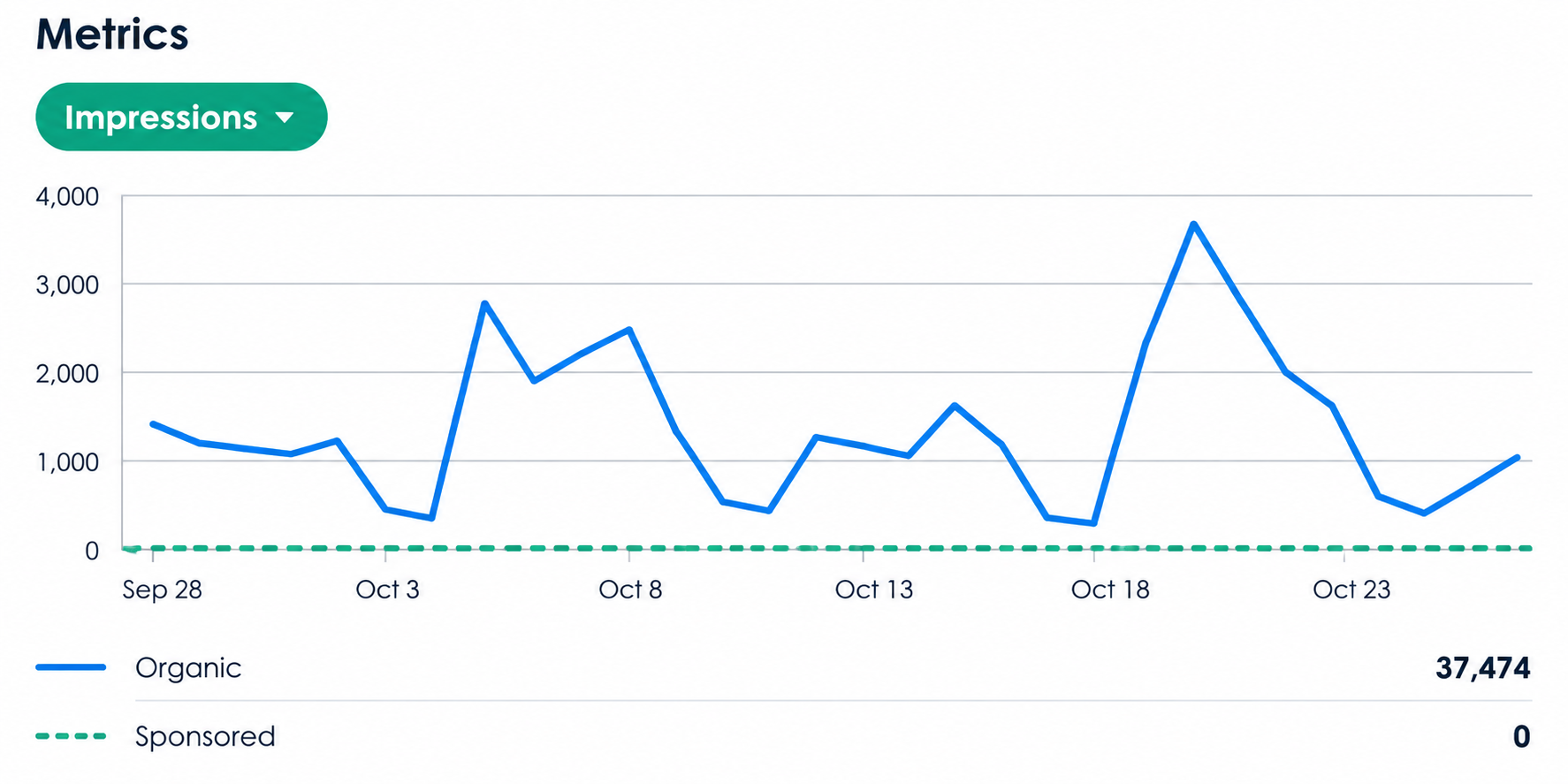
Well, it’s not. In most instances, we need to calculate what is going to work. Our audience and their customer journey evolve with internal and external forces, and what worked this week won't necessarily work next week. This is where we use insights and analytics to back the work we have already tested. We can ascertain what has been successful and use this extrapolated data in new and creative ways to further replicate and perhaps repurpose this in a new and more relevant formats to meet our audience where they are now at. This is where having some professional marketing knowledge and input has its advantages. If, however, this does not work, we must trial other posts or fix and adjust current wording, images, or calls to action during a campaign to improve the traction. These are all small subtleties that take time and sometimes money as well.
Once you have a fixed objective for each campaign, you then decide on the relevant Key Performance Indicators (KPI’s) you wish to monitor and we can then have a benchmark to work from. These KPIs measure the progress of your objective, and the benchmarks help inform a target for you to reach. This target should adhere to SMART goals you made at the beginning to make them more measurable.
Until all of these steps are fully understood by businesses, and these are not exhaustive, there is a tendency to use the overview in a social media dashboard as vanity metrics. This is where the Likes, follows and reach are given more value over the balance of all the other available data. There is a definite need to look and consider this data and it is still relevant for measurement, but it shouldn’t be the only information used to consider success or failure of a marketing campaign (Pencarelli and Mele, 2019).

Are We Interpreting the Results Incorrectly?
One thing that has become clear on social media platforms is that having fewer likes and shares does not necessarily mean that the content hasn’t been well received by our audience or not led to sales or a conversion. Consider the call to action (CTA), or the link clicks. Where does it take the viewer? If it is to a conversion of some description (like to a sale of a product, a download or an email or a subscription to an email list), then it isn’t relevant for them to Like the post or even comment under it, unless you had previously asked them to.
This kind of data can be collected more readily away from social platforms and in Google Analytics 4, which is connected to the back end of the website or perhaps in your email platform or CRM. Though the data isn’t found in your social media analytics, it can be driven by your social media strategy.
Social media and digital media performance should work hand in hand. It helps inform all of your wider marketing decisions and consider how the results are impacted by each other (Keegan and Rowley, 2017).
How to Decide What to Measure & What Actually Matters
As previously mentioned, KPIs matter. These should be firmly linked to your business objectives (Keegan and Rowley, 2017). If your objective is to sell tickets to an event, then it is relevant that you build awareness, consideration and conversion of this event over a period of weeks and months through various means of paid and organic, online and offline means to reach your pre-determined SMART goals.
Social media should not be treated as the only way we meet and engage with our audience. We should consider the full spectrum of digital marketing tools to aid our strategy. This means we should consider creating and monitoring website traffic, email tools and CRMs and measuring any leads or conversions that come from these.
The measurements that matter very much depend on what your objective is and what you consider as successful. For example, you’re a brand new coffee shop in town and you want to let people know you’re now open. Your primary objective here would be to build awareness. Your objectives here would likely be visiting your profile (and follow), targeting and engaging local people, and having people ask for directions to your location. In this instance you are more looking for brand recognition and follows. It’s not likely that you will make immediate direct sales from this type of campaign but if you reach and engage anything from a few hundred to a few thousand people, that could be deemed successful, depending on the timeframe involved.
As another example, instead of a location based business, let’s consider an online retailer. The kind of measurements that matter to them would be website visits, information downloads, email subscriptions and if they have a shop, add to cart and actual purchases as well. The measurements they’re looking for could well be smaller, but the data could prove to be a lot more informative. In this case you could have data of 300 people visiting the website and receiving 15 online sales. This would be a 5% conversion rate. Is this good in your opinion? Although the results may be smaller, you are still meeting your objectives.
Now for Something Useful!
Creating a framework to follow helps turn your social media data into working goals, objectives and decisions. This blog has always been about providing training and support, so I hope you find this useful.

Your objective is your goal setting and should reflect what question you’re looking to have answered by the end of the campaign. Are you looking for views, sales, reach or engagement? This in turn informs the KPIs you should be monitoring in order to accurately measure the objective(s).
With regards to interpret and action, look into the relevant insights and analytics more deeply. Investigate what may have contributed to your campaigns results, even if that means looking beyond your social media analytics and checking relevant third party tools and CRMs.
To answer my first question, “Does high engagementon your social media actually mean you’re being successful?”
The value of social media success can be measured not only through immediate financial gains but through the value we create through customer relationships and engagement. The argument from Hoffman and Fodor states that the perspective of customer behaviour and motivations should be used to evaluate social media marketing and not exclusively relying on traditional return on investment (ROI) calculations (Hoffman and Fodor, 2010).
Within my peer group, the phrase “it depends…”is highly overused and quite rightly so! What objective were you looking to have answered? The metrics you measure are only usefully interpreted when in context with your objective. Being observant and agile is an essential skill for managing your marketing effectively and competitively.
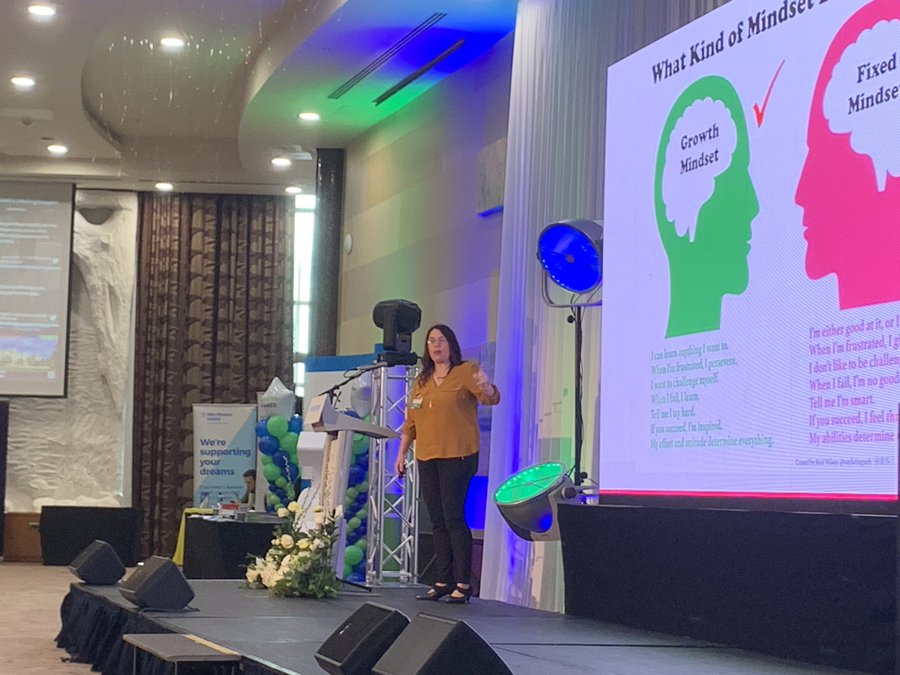
It may take time to develop the skills needed to interpret your data effectively, but doing so could help you make better marketing decisions, reduce wasted budget and build stronger relationships with your audience.
References
European Commission (2025) Digital Decade 2025 country report: Ireland. Commission Staff Working Document, SWD (2025) 294 final. Available at: https://enterprise.gov.ie/en/publications/publication-files/digital-decade-2025-ireland-country-report.pdf (Accessed: 29 October 2026).
Hoffman, D.L. and Fodor, M. (2010) ‘Can you measure the ROI of your social media marketing?’, MIT Sloan Management Review, 52 (1), pp. 41–49. Available at: https://ssrn.com/abstract=1697257.
Keegan, B.J (1), pp. 15–31. Available at: https://doi.org/10.1108/MD-10-2015-0450.
Pencarelli, T. and Mele, M.G. (2019) ‘A systematic literature review on social media metrics’, Mercati & Competitività, 2019 (1), pp. 15–38. Available at: https://doi.org/10.3280/mc1-2019oa7624.
Peters, K., Chen, Y., Kaplan, A.M., Ognibeni,B. and Pauwels, K. (2013) ‘Social media metrics: A framework and guidelines formanaging social media’, Journal of Interactive Marketing, 27 (4), pp. 281–298. Available at: https://doi.org/10.1016/j.intmar.2013.09.007.

Working with clients Nationwide from base in Mullingar.